
Your eyes used to sparkle with energy, and now they tell a different story. Heavy lids make you look perpetually exhausted. Drooping skin steals the brightness from your gaze. And no amount of sleep or eye cream seems to reverse what time has done.
If you’re frustrated watching your upper eyelids gradually hide your natural radiance, there’s a solution beyond topical treatments. Upper eyelid surgery offers a real, lasting transformation when skincare simply can’t reach deeper. It helps you look as refreshed on the outside as you feel on the inside.
This guide walks you through the essentials: what happens during treatment, how recovery unfolds, and whether you’re the right candidate.
Understanding Why Upper Eyelids Age and Droop
Time doesn’t just pass; it leaves visible marks on your face. The delicate skin around your eyes is thinner than anywhere else, making it especially vulnerable to ageing. Collagen breaks down naturally, and elasticity fades while gravity pulls everything downward.
Sun exposure significantly speeds up this process. Genetics determines how quickly changes occur, while repetitive facial expressions contribute to visible effects. For some people, drooping skin can hang into their field of vision, making daily activities like reading or driving genuinely difficult.
How the Procedure Restores Your Natural Appearance
Upper eyelid surgery, medically termed blepharoplasty surgery, addresses ageing concerns through precise surgical techniques. The procedure removes excess skin that builds up on your upper lids while respecting your natural eye shape.
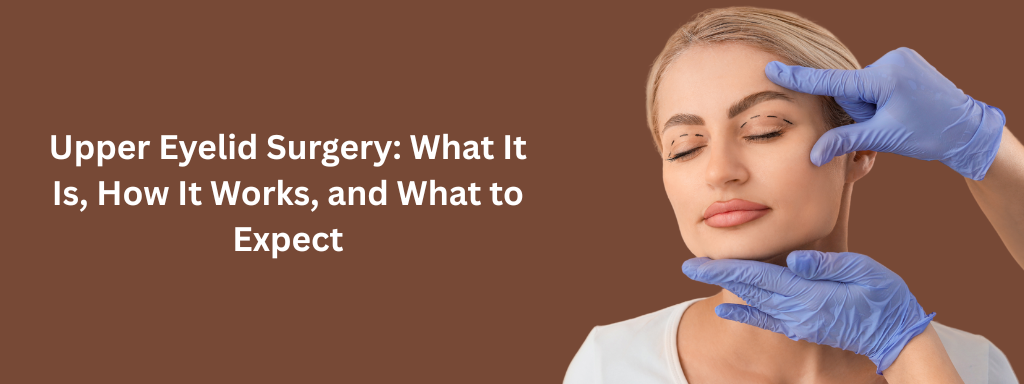
Your surgeon makes careful incisions along your eyelid’s natural creases, exactly where any fine scars will stay virtually invisible. Through these incisions, extra skin is removed, and occasionally small amounts of fat are repositioned to eliminate puffiness. The transformation reveals the alert, refreshed version of yourself.
What to Expect During Your Blepharoplasty Surgery
The procedure is performed in an outpatient facility, so you go home the same day. Depending on your comfort level, you’ll receive local anaesthesia with sedation or general anaesthesia. Once you’re comfortable, your surgeon works with careful precision for about thirty to forty-five minutes.
Key aspects of the treatment:
- Incisions follow your eyelid’s natural fold lines
- Extra skin is carefully measured and removed
- Fat deposits may be repositioned if needed
- Fine sutures close the incisions for the best healing
Recovery takes patience but isn’t as overwhelming as many imagine.
Your Recovery Timeline After the Surgery
Recovery from upper eyelid surgery usually takes around two to four weeks, but most people feel comfortable stepping out within ten days. Knowing this upfront helps you plan your schedule better, ease anxiety, and go into the healing phase with clear, realistic expectations.
Week One: Initial Healing
Bruising and swelling peak during the first few days. Ice packs become your best friend; apply them for ten to twenty minutes each hour while awake. Sleeping with your head elevated can significantly reduce swelling. Pain stays minimal, usually managed with over-the-counter medication.
Week Two: Visible Improvement
Most swelling goes down, and you’ll notice your eyes opening wider. Stitches are typically removed around day seven, and many people return to work at this point.
Weeks Three to Four: Final Results
Any remaining swelling disappears. Your refreshed appearance becomes fully visible, and incision lines fade into the natural creases.
Considering eyelid surgery in Mumbai? Experience expert care at Sculpta Aesthetics.
Who Makes an Ideal Candidate for The Treatment
Almost anyone bothered by drooping upper eyelids can benefit from blepharoplasty surgery, but certain characteristics indicate you’re particularly well-suited for the procedure. The right candidates typically show visible excess skin, creating a hooded appearance or experience functional concerns.
Physical indicators you might need surgery:
- Upper eyelid skin resting on or near your lashes
- A heavy feeling that makes keeping eyes open tiresome
- Persistent puffiness that skincare can’t address
Functional concerns that warrant intervention:
- Drooping skin obstructing peripheral or superior vision
- Difficulty with activities like reading or driving
- Constant need to raise eyebrows to lift eyelids
Important health considerations:
- Good overall physical health ensures optimal healing
- Non-smokers heal faster with fewer complications
- Realistic expectations about natural-looking results
You’ll simply look more rested and like the vibrant version of yourself. The procedure accentuates what you already love about your eyes: their colour, expressiveness, and natural shape. That’s exactly the goal: subtle, natural rejuvenation.
Experience Expert Upper Eyelid Transformation at Sculpta Aesthetics
Choosing where to have upper eyelid surgery matters as much as deciding to have it. At Sculpta Aesthetics, we combine surgical expertise with artistic sensibility to deliver results that look naturally beautiful.
Our experienced surgeons understand that every face tells a unique story. We assess your specific anatomy, discuss your aesthetic goals, and create personalised treatment plans that honour your individual features. Using advanced surgical techniques and medical-grade care protocols, we prioritise both safety and exceptional outcomes.
Located in Mumbai, our state-of-the-art facility maintains the highest standards of hygiene and patient care. From your initial consultation through complete recovery, Sculpta Aesthetics guides you with transparency, expertise, and genuine commitment to your satisfaction.
FAQs
1. How long does recovery from upper eyelid surgery take before looking normal?
Most people resume social activities within 10 to 14 days after surgery. Initial swelling and bruising resolve quickly during the very first week. Complete healing takes three to four weeks for final results to fully appear.
2. Will my blepharoplasty surgery scars be visible to others afterwards?
Post-surgery scars are very subtle because the incisions align with natural eyelid creases. Within weeks, they fade to thin lines barely noticeable. Proper surgical technique and good aftercare ensure scarring stays minimal and well-concealed throughout healing.
3. Can eyelid surgery fix vision problems caused by drooping skin?
Yes, it can improve function when excess skin interferes with vision. Many patients notice clearer peripheral and upper sight after treatment, along with reduced eye strain and heaviness. This makes the surgery both a functional solution and an aesthetic enhancement.
4. What makes Sculpta Aesthetics the right choice for my upper eyelid surgery?
Sculpta Aesthetics brings together surgical precision and truly personalised care. Each procedure is thoughtfully planned to suit individual facial structure and skin needs, using advanced techniques and strict safety protocols to deliver results that look natural, balanced, and refined.
5. How long will my results from eyelid surgery last over time?
The results typically last ten to fifteen years before ageing becomes noticeable again. Unlike temporary treatments that require constant maintenance, this procedure provides a lasting transformation. Results depend on skin quality, genetics, sun protection, and lifestyle habits.