
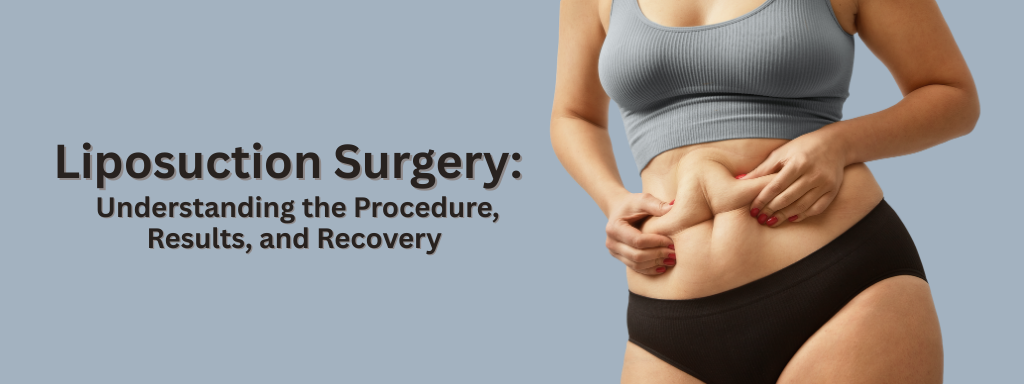
Some fat simply does not respond. You eat well, you stay active, you are consistent, and yet certain areas of your body hold on despite it all. The belly, the waist, the backs of the arms. These pockets of fat are not a sign of poor effort. They are biologically resistant to the signals that trigger fat loss, and no diet or exercise routine can fully reach them. Liposuction surgery comes into the picture for exactly this reason. This guide covers everything you need to know before making a decision.
What Is Liposuction Surgery and How Does the Procedure Work?
For anyone researching their options, understanding what liposuction surgery is practically makes all the difference before a consultation.
A surgeon makes small incisions over the area being treated and inserts a thin tube, called a cannula, just beneath the skin. This tube moves gently through the fat layer, loosening and drawing out fat cells. Before the cannula is inserted, a medicated solution is injected into the area. It numbs the tissue, reduces bleeding, and makes removal significantly more precise.
More advanced techniques are also available. VASER liposuction uses sound wave energy to gently break down fat cells before they are removed, causing very little disruption to surrounding tissue. Laser-assisted liposuction uses controlled heat to dissolve fat and can lightly firm the overlying skin. Understanding what is liposuction surgery across these different approaches helps you ask the right questions and choose the technique best suited to your needs.
How Fat Reduction Surgery Works and What It Cannot Do!
Before committing to the procedure, knowing exactly what fat reduction surgery achieves and where its boundaries lie is essential.
The procedure removes fat cells from the treated area. Once removed, those cells do not return to that same location. This is why results hold well over time when a stable weight is maintained. However, it is not a weight-loss treatment. Remaining fat cells in the body can still expand with weight gain after surgery. The procedure reshapes and contours. It does not change the number on the scale.
Skin tightening is also outside what this surgery can deliver on its own. After fat is removed, the skin above must contract naturally. Those with good skin elasticity typically see clean, defined results. Those with looser skin may benefit from combining the procedure with a skin-tightening treatment for a more complete outcome.
Stomach Fat Removal Surgery and Why the Abdomen Is Treated Most
The abdomen is the most commonly treated area in body contouring, and the biology behind this is well established.
Hormonal shifts, pregnancy, ageing, and genetics all drive fat accumulation deep around the belly over time. This fat sits in a layer beneath the skin that diet and exercise rarely reach, which is why so many people struggle to flatten their stomach despite their best efforts. Fat removal surgery for the stomach addresses the lower belly, upper abdomen, and sides of the waist in one session, producing a flatter, more balanced midsection.
Surgeons work across the entire area, paying attention to evenness and proportion rather than simply removing as much fat as possible. Stomach liposuction can also be combined with a tummy tuck when loose skin or weakened abdominal muscles are present. This delivers a more thorough result within a single surgical plan.
Discover the right body contouring approach for you with a consultation at Sculpta Aesthetics.
What the Recovery Process Looks Like After Liposuction Surgery
Most patients find the recovery from surgery far more manageable than anticipated.
A compression garment is worn immediately after surgery and kept on for several weeks. It controls swelling, helps the skin adapt to its new contour, and supports the healing tissue beneath. Gentle walking is encouraged from the very first day to keep circulation moving. Most patients are back at a desk within seven to ten days. Swelling and mild bruising are normal in the first week and improve steadily. Exercise resumes gradually from around weeks four to six with surgeon clearance. The final shape settles between three and six months after surgery as the deeper swelling resolves.
Are You an Ideal Candidate for the Procedure?
Strong suitability for liposuction surgery is crucial, and an honest assessment of candidacy is as vital as the procedure itself. The following points indicate strong suitability.
- You are close to your target weight and have been stable for at least six months.
- You carry stubborn fat in specific areas that do not respond to diet or exercise.
- Your skin has good elasticity and can adapt well once fat is removed.
- You are in good general health with no conditions that increase surgical risk.
Those with significant skin laxity may achieve stronger results by combining this with a skin removal treatment. A thorough consultation will determine the best approach for your body.
Experience Expert Liposuction Surgery at Sculpta Aesthetics
Choosing the right clinic is as important as choosing the right procedure.
At Sculpta Aesthetics, every body contouring journey starts with an honest, thorough assessment of your anatomy, your goals, and your medical history. Our surgeons build a treatment plan around you specifically, not a one-size-fits-all approach. We use advanced, medical-grade techniques and maintain the highest standards of care throughout every procedure. If you are considering Liposuction Surgery in Mumbai, Sculpta Aesthetics offers the precision and expertise your results deserve.
For those exploring Body Contouring Treatment in Mumbai, our team designs targeted plans that work with your natural shape. From your first consultation to your final follow-up, you receive genuine expert care at every step.
Conclusion
Liposuction surgery is not a shortcut, and it is not a weight-loss solution. It is a precise, well-established answer for fat that effort alone cannot shift. When approached with clear expectations and a commitment to a healthy lifestyle, liposuction delivers results that nothing else can. Understanding the procedure fully is where every good decision begins.
FAQs
1. What is liposuction surgery, and who is it best suited for?
It removes localised fat deposits from targeted body areas through small incisions using a thin tube and suction. It suits adults near their ideal weight with good skin elasticity whose problem areas do not respond to diet or exercise.
2. How long does recovery take, and when do final results appear?
Most patients return to desk work within seven to ten days. Swelling peaks in the first week and improves steadily. Final results from liposuction appear between three and six months as swelling resolves and skin settles.
3. What does stomach fat removal surgery involve, and is it painful?
The procedure targets the lower belly, upper abdomen, and sides of the waist through small incisions. Most patients experience tightness and soreness rather than sharp pain. Discomfort is managed with medication and improves within a few days
4. Is this the right procedure for someone who wants to lose weight?
It is not a weight-loss treatment. Fat reduction surgery removes localised fat to reshape specific body areas. Sculpta Aesthetics recommends it only for patients near their goal weight who have stubborn deposits that have not responded to lifestyle changes.
5. Why do patients choose Sculpta Aesthetics for body contouring in Mumbai?
Sculpta Aesthetics combines surgical precision with personalised care and advanced medical-grade techniques. Every patient receives a tailored plan built around their anatomy and goals. Our team supports each patient from consultation through recovery, focused on natural and lasting results.