
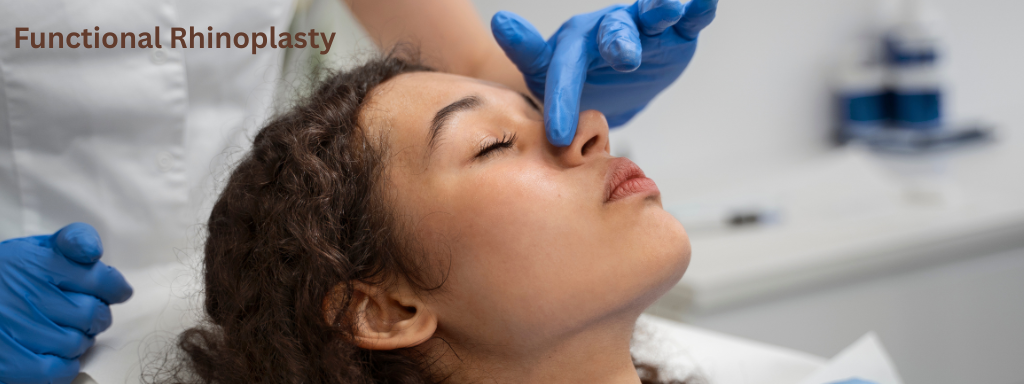
Your nose has two jobs: helping you breathe and contributing to your facial appearance. If you struggle with nasal blockage, mouth breathing, or difficulty breathing through one side of your nose, the problem may be structural rather than temporary.
Functional rhinoplasty is designed to address structural issues that affect nasal airflow. At Sculpta Aesthetics, the procedure can also be planned to address aesthetic concerns when appropriate, helping patients improve both the function and appearance of their nose.
First, Ask Yourself: Is Your Nose Affecting Your Breathing?
If you’re searching for rhinoplasty for breathing problems, the important question isn’t simply whether you need rhinoplasty. It is, what is causing the breathing problem in the first place? You may want to discuss functional rhinoplasty with Sculpta Aesthetics if you regularly experience:
- Difficulty breathing through one or both nostrils
- Persistent nasal blockage
- One nostril feeling more blocked than the other
- Frequent mouth breathing
- Difficulty breathing during exercise
- Breathing problems following an injury to the nose
- Nasal obstruction that continues despite appropriate treatment
A detailed nasal assessment is particularly important when exploring rhinoplasty surgery in Mumbai, because the right procedure depends on whether your concern is related to the septum, nasal valves, turbinates, or another structural issue.
What’s Actually Causing the Problem?
Different structural problems can create similar symptoms. Several structural issues can affect how freely air moves through the nasal passages. Identifying the underlying cause is important because functional rhinoplasty is not one standard procedure. The treatment approach depends on the specific structure affecting your breathing and overall nasal function.
A Deviated Septum
The septum separates the two nasal passages. If it is significantly deviated, one side may become narrower, making breathing more difficult. Septal correction may be performed as part of functional rhinoplasty when appropriate.
Nasal Valve Narrowing or Collapse
The nasal valves are among the narrowest areas of the nasal airway. Weakness or narrowing here can restrict airflow, particularly during deeper breaths or exercise.
Enlarged Turbinates
Turbinates help warm and humidify the air you breathe. When they become enlarged, they can contribute to persistent nasal obstruction.
Previous Nasal Injury
An old injury can change the internal structure and external shape of the nose. In such cases, functional rhinoplasty may help address both breathing difficulties and visible changes caused by the trauma.
Functional or Cosmetic? Sometimes, It’s Both.
Rhinoplasty isn’t always about choosing between breathing better and looking better. Some patients have both concerns. For example, you may have a deviated septum affecting your breathing and also have a crooked nose or a prominent nasal hump that affects your appearance.
In these situations, Sculpta Aesthetics can assess both concerns together. This is where functional rhinoplasty can offer a more comprehensive approach than treating appearance or breathing in isolation.
|
Functional Rhinoplasty |
Cosmetic Rhinoplasty |
|
Improves nasal function |
Improves nasal appearance |
|
Addresses structural obstruction |
Addresses aesthetic concerns |
|
May involve septum or nasal valves |
May reshape the bridge, tip or nostrils |
|
Focuses on airflow and support |
Focuses on facial balance |
What Could Improve?
The potential rhinoplasty benefits depend on what is causing your problem and what needs to be corrected. The goal isn’t to create a completely different nose. At Sculpta Aesthetics, the focus is on creating a result that works well and remains proportionate to the rest of your face.
If your main concern is breathing
Functional rhinoplasty may help improve nasal airflow by addressing structural obstruction.
If your nose was affected by an injury
Treatment may help restore both nasal function and external symmetry.
If you’re unhappy with your appearance too
Aesthetic refinements can sometimes be incorporated alongside functional correction.
If you have both concerns
The treatment can be planned around both function and facial harmony.
What Are the Rhinoplasty Benefits Beyond Appearance?
For someone considering rhinoplasty for breathing problems, improved airflow can be one of the most important reasons to consider treatment. Some patients may also notice improvements in sleep-related symptoms when nasal obstruction is affecting their breathing.
However, functional rhinoplasty is not a universal treatment for sleep disorders. The cause of poor sleep or breathing should be evaluated first.
Depending on the underlying issue, potential rhinoplasty benefits may include:
- Easier nasal breathing
- Improved airflow
- Better nasal symmetry
- Improved facial balance
- Greater comfort during physical activity
- Increased confidence in your appearance
Before You Decide, Ask These 5 Questions
A consultation at Sculpta Aesthetics should help you understand why you’re experiencing breathing difficulties and what treatment may address them. Instead of focusing only on how your nose could look, discuss its structure, function, realistic outcomes, and whether functional rhinoplasty can address your concerns.
At Sculpta Aesthetics, consider discussing:
- What is causing my breathing difficulty?
Understanding the actual structural problem helps determine whether surgery is appropriate.
- Is my septum deviated?
A deviated septum may contribute to one-sided or persistent nasal obstruction.
- Could my nasal valves be affecting airflow?
Not every breathing problem comes from the septum. Other nasal structures can also restrict airflow.
- Can my breathing and appearance be addressed together?
If you have both functional and aesthetic concerns, ask whether they can be treated as part of one surgical plan.
- What result is realistic for my nose?
Your anatomy, skin thickness, cartilage, facial proportions, and healing all influence the final result.
Sculpta Aesthetics’ approach to personalised treatment extends beyond facial procedures. Patients exploring body contouring treatment in Mumbai can also discuss their individual aesthetic concerns and desired outcomes during a consultation.
What Does Recovery Look Like?
Recovery after functional rhinoplasty varies according to the extent of correction and techniques used during surgery. While initial swelling and congestion generally improve within the first few weeks, the nose continues changing as it heals. Sculpta Aesthetics can provide a personalised recovery timeline.
First few days
Swelling, congestion, bruising, and difficulty breathing through the nose can occur.
Around 1-2 weeks
Initial swelling and visible bruising begin to settle, and many patients can gradually return to normal social activities.
Following months
The nose continues to heal and refine. Final results can take several months to become fully apparent.
Sculpta Aesthetics notes that patients may be fit for desk work in around 5-7 days and socially fit in approximately 2-3 weeks, although individual recovery can vary.
Conclusion
Functional rhinoplasty isn’t simply about changing the way your nose looks. For the right patient, it can address structural problems that interfere with breathing while also improving nasal shape and facial balance. If you’ve been searching for rhinoplasty for breathing problems, understanding the cause of your nasal obstruction should come before deciding on a procedure.
The potential rhinoplasty benefits depend on your individual anatomy, concerns, and treatment plan. From facial procedures such as rhinoplasty to body contouring treatment in Mumbai, Sculpta Aesthetics focuses on creating treatment plans around individual anatomy, expectations, and aesthetic goals.
At Sculpta Aesthetics, a personalised consultation can help determine whether functional rhinoplasty or another approach is appropriate for your needs. If you’re exploring rhinoplasty surgery in Mumbai, the first step is understanding what your nose needs, not simply what you want it to look like.
FAQs
1. Can rhinoplasty improve breathing and appearance?
Yes. Functional rhinoplasty can address structural problems that affect nasal airflow while aesthetic changes may also be incorporated when appropriate. This can provide both functional and cosmetic rhinoplasty benefits for suitable patients.
2. How long does rhinoplasty recovery take?
Initial recovery usually takes around 1–3 weeks, while swelling and the final shape of the nose continue to settle over several months. Sculpta Aesthetics notes that patients may return to desk work in approximately 5–7 days and become socially fit in around 2–3 weeks, depending on individual healing.
3. Does rhinoplasty improve sleep and breathing quality?
Functional rhinoplasty may improve nasal airflow and some sleep-related symptoms when structural nasal obstruction contributes to breathing difficulties. However, it is not a treatment for every sleep disorder, so the underlying cause should be evaluated first.
4. What are the main rhinoplasty benefits?
The potential rhinoplasty benefits include improved nasal airflow, correction of structural concerns, better nasal symmetry, improved facial balance, and greater confidence. The results depend on the patient’s individual anatomy and treatment goals.
5. Is functional rhinoplasty different from cosmetic rhinoplasty?
Yes. Functional rhinoplasty primarily addresses structural and breathing concerns, while cosmetic rhinoplasty focuses mainly on appearance. However, Sculpta Aesthetics may plan both functional and aesthetic corrections together when a patient has both concerns.